

Why Manhattan’s Q2 Results Deserve a Closer Look
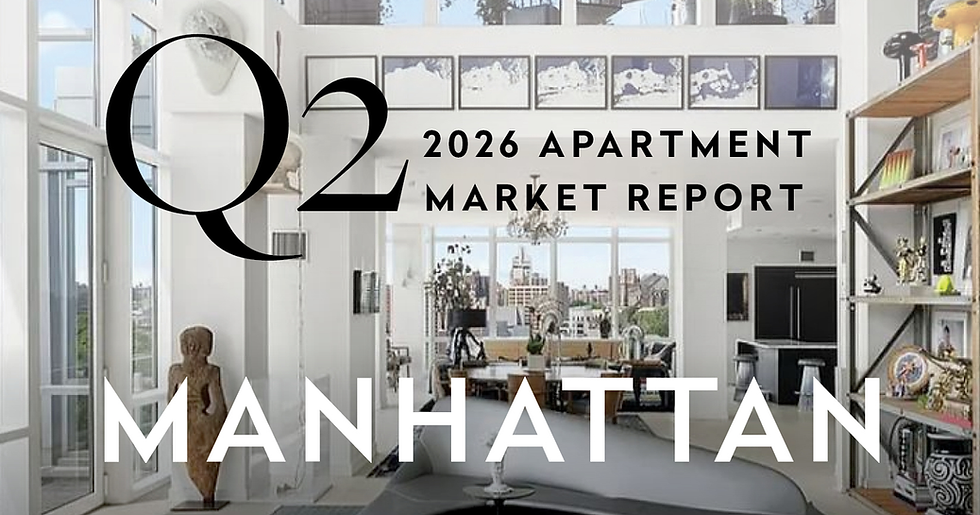
The recently released Q2 2026 Manhattan Apartment Market Report paints a picture of a market that continues to demonstrate resilience, even as buyers navigate higher borrowing costs and ongoing economic uncertainty.
Average apartment prices rose 5% year-over-year to just over $2.23 million, while the median sale price increased 6% to $1.29 million—both the second-highest levels ever recorded. Yet beneath those impressive headline figures lies a more nuanced story about where demand remains strongest and what continues to influence pricing.
Luxury Continues to Influence the Market
As we’ve discussed in recent months, Manhattan’s luxury market continues to play an outsized role in shaping overall market statistics—a trend we’ve been following throughout the year.
According to Brown Harris Stevens CEO Bess Freedman, much of the increase in average pricing can be attributed to new development closings, where average prices climbed 17% compared to the second quarter of last year. However, she also points out that many of those contracts were signed months or even years ago, meaning today’s closing prices don’t necessarily reflect current buyer activity.
This mirrors broader industry reporting, which found that luxury new development sales remained one of the strongest drivers of Manhattan’s second-quarter performance, continuing a trend we’ve been following throughout the year.
Demand Hasn’t Disappeared
One of the more encouraging takeaways from the report is that demand has remained remarkably steady. Despite continued uncertainty surrounding inflation, mortgage rates, and global events, the number of Manhattan apartment sales was virtually unchanged from a year ago. At the same time, resale apartments spent slightly fewer days on the market, while sellers received a slightly higher percentage of their asking price than they did a year earlier.
These aren’t the characteristics of a market losing momentum. Rather, they suggest buyers continue to move forward when they find properties that align with their needs and expectations.
Not Every Segment Is Moving Together
Another interesting shift this quarter is that the strongest pricing gains weren’t concentrated solely within the condominium market. Resale co-op prices increased approximately 9% year-over-year, led primarily by larger apartments, while average resale condo prices declined modestly from last year’s unusually strong luxury closings.
This serves as a good reminder that Manhattan isn’t one single market. Different property types, price points, and neighborhoods continue to perform differently depending on available inventory, buyer preferences, and the mix of properties changing hands each quarter.
Looking Beyond the Headlines
It’s easy to focus on record or near-record prices, but context matters. Many of the highest-priced new development transactions entering the closing pipeline today were negotiated well before today’s market conditions. Meanwhile, resale activity continues to reflect a market that’s active, but also measured with buyers remaining selective and disciplined in their decision-making.
For both buyers and sellers, understanding what’s driving the numbers is often just as important as the numbers themselves.
The Takeaway
The second quarter reinforces a trend we’ve been discussing throughout much of this year: Manhattan remains a resilient market, but one that continues to be shaped by different forces across different segments.
Luxury new developments continue to influence headline pricing, while steady resale demand demonstrates that well-positioned properties continue to attract buyers. As always, looking beyond the averages provides a much clearer picture of where today’s opportunities exist.
Serj Markarian


